Maintenance and Work Order Systems
Record faults, assign tasks, schedule maintenance, track spare parts, and document completed work.
Benefit More organised maintenance workflows and improved tracking of outstanding jobs.
Energy providers and utility organisations manage infrastructure, equipment, maintenance, service requests, field teams, customers, and operational records. Keeping these activities coordinated is essential to managing assets and responding to service needs.
Obitrek builds technology systems that help energy and utility organisations organise asset information, coordinate maintenance, track service activity, and improve visibility into operational performance.
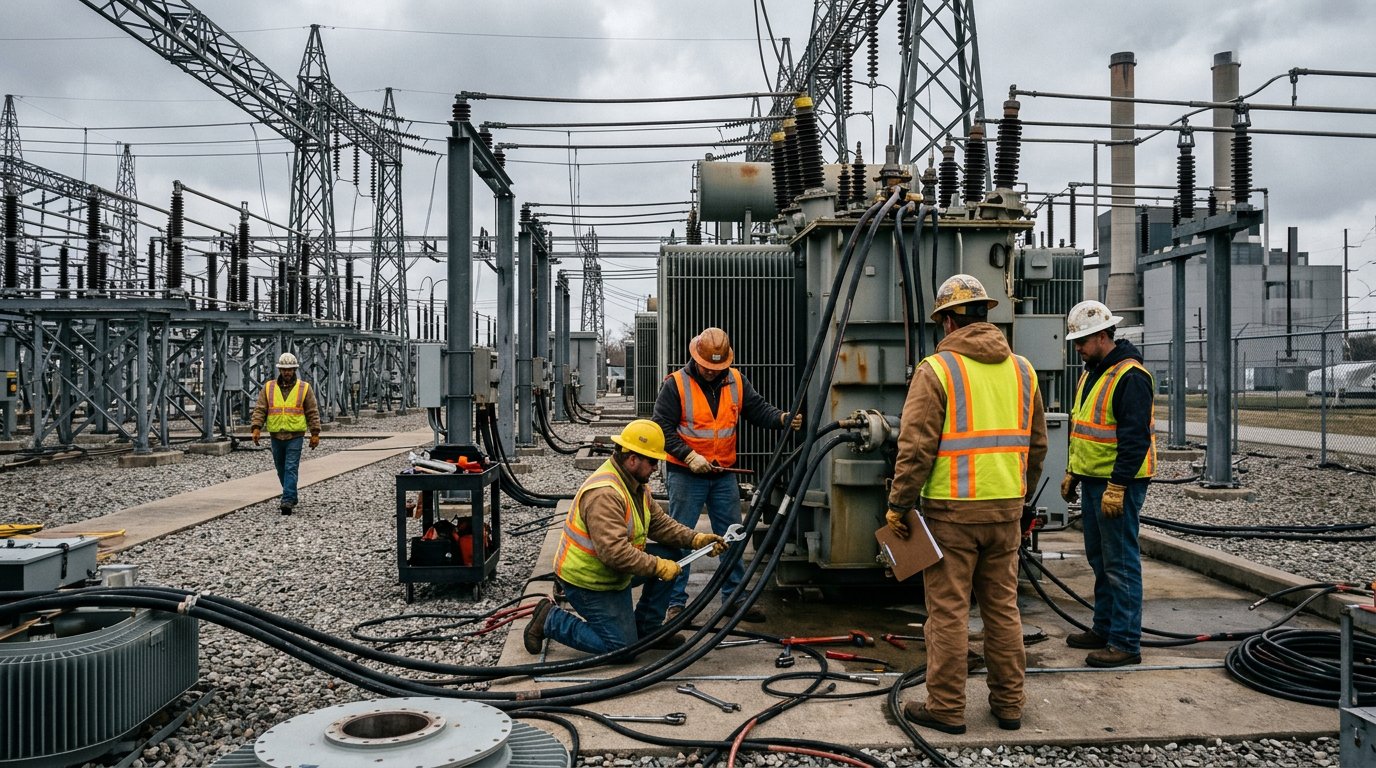
Electricity providers, renewable energy operators, water utilities, and other infrastructure organisations manage assets spread across sites and service areas.
They need reliable records of equipment, inspections, faults, repairs, service requests, work orders, and resource use. Some operations also depend on real-time information from compatible monitoring and control systems.
When information is scattered across departments, field teams and managers may struggle to see the full status of an asset or service request.
Organisations in this sector face different challenges, but several recurring problems can make operations more difficult than they need to be.
Maintenance requests that are difficult to track.
A related capability Workflow automation →
Poor visibility into inspections, faults, and repair histories.
A related capability Enterprise software →
Disconnected field-service and office workflows.
A related capability Digital Platforms and Portals →
Difficulty coordinating work across multiple sites.
A related capability Systems Integration →
We design systems around the organisation's operational requirements. A solution may be a standalone application, an integration, an automated workflow, a reporting environment, or a combination of these.
Maintain equipment registers, locations, asset histories, inspections, warranties, and related documentation.
Benefit Better visibility into infrastructure and easier access to asset information.
Record faults, assign tasks, schedule maintenance, track spare parts, and document completed work.
Benefit More organised maintenance workflows and improved tracking of outstanding jobs.
Coordinate service requests, work assignments, field-team updates, and completion records.
Benefit Better communication between field personnel and office teams.
Allow customers or authorised users to submit requests, track progress, and access relevant service information.
Benefit More structured service administration and clearer request status.
Consolidate suitable information from asset, maintenance, and service systems. Where compatible, operational data can be integrated from existing monitoring platforms.
Benefit Improved operational visibility and more informed maintenance and resource decisions.
A fault is reported through an approved channel and registered as a service or maintenance request. The system identifies the relevant asset, assigns the work, records inspection and repair activity, and updates the job status. Management can review outstanding work, response times, asset history, and recurring issues.
For critical infrastructure, the solution must be designed carefully around operational technology, cybersecurity, safety, and service-continuity requirements.
Potential applications include maintenance reminders, fault-reporting workflows, document processing, and analysis of asset histories. Predictive maintenance may be possible where sufficient reliable data exists.
Control systems affecting electricity, water, or other critical services require specialist engineering, testing, access restrictions, and appropriate safety measures. Business information systems should not be connected to operational control environments without a suitable security and engineering design.
Every implementation has different objectives. These are intended benefits, not guaranteed outcomes.
Better asset and maintenance records.
Improved tracking of field work.
More organised service requests.
Better visibility into operational tasks.
Easier reporting across sites.
A foundation for integrating suitable monitoring systems.
These are intended benefits, not guaranteed outcomes. Obitrek would define suitable objectives with the organisation before implementation.
We assess the asset and service workflows, information requirements, existing platforms, and operational constraints before proposing the system. Implementation is planned around reliability, security, compatibility, and the organisation's service responsibilities.
The starting point is understanding your operation. Obitrek turns operational requirements into practical technology systems designed around your needs.
Related capabilities