← All industries

Industries we serve

Technology Systems That Keep Goods and Operations Moving

Logistics and transportation organisations coordinate vehicles, drivers, shipments, warehouses, routes, customers, and delivery schedules. When information is scattered across calls, paper records, spreadsheets, and separate platforms, delays become harder to investigate and operations become more difficult to manage.

Obitrek builds technology systems that help logistics operators coordinate deliveries, track shipments, manage fleet information, organise warehouse activity, and improve visibility across their operations.
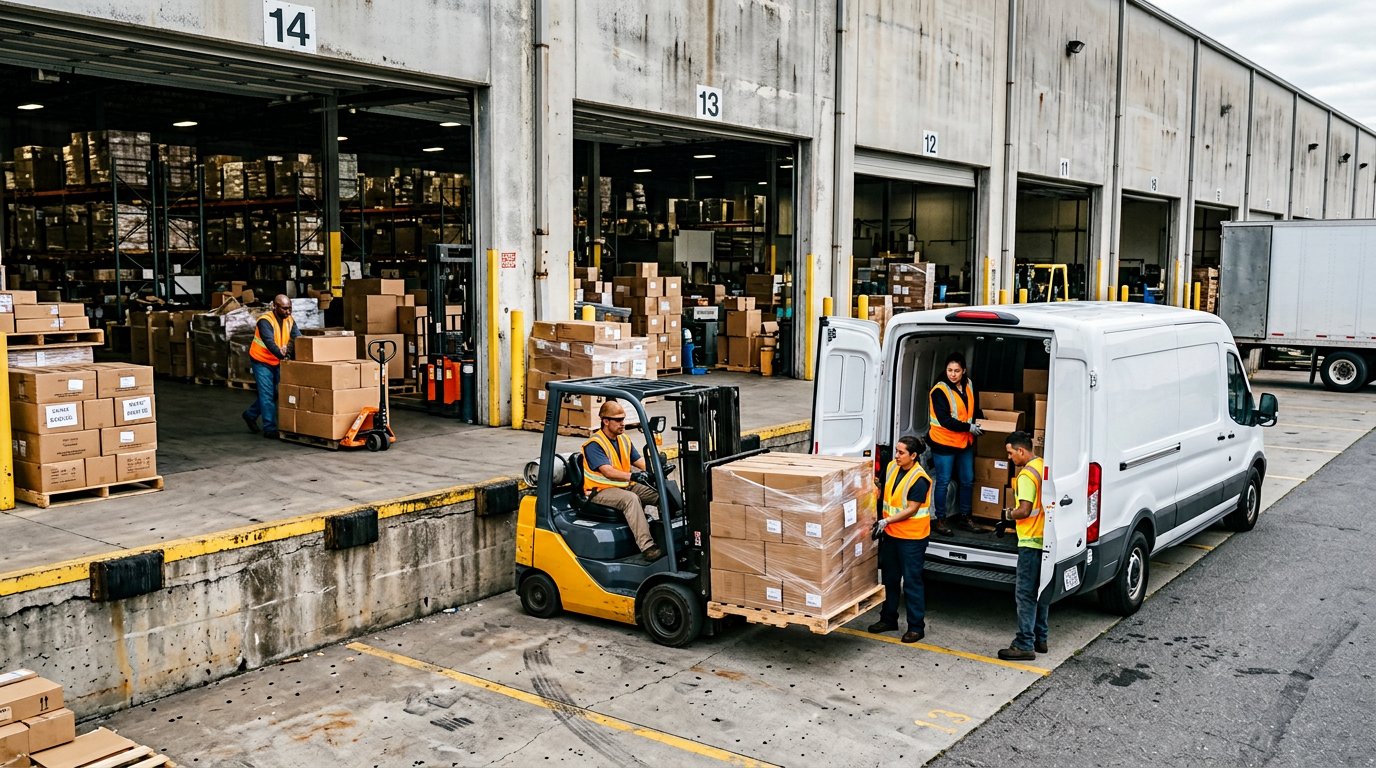
Warehouse and transport teams coordinating shipments, vehicles and delivery records.
The sector

Understanding logistics operations

A shipment may pass through order confirmation, collection, warehouse handling, transport, delivery, and proof of receipt. Each stage depends on accurate information and coordination between different people and locations.

Transport companies also need to manage vehicle availability, maintenance, fuel expenditure, driver assignments, and customer communication.

Technology can connect these processes and give staff a clearer view of what is happening throughout the operation.

Challenges

The operational challenges we help address

Organisations in this sector face different challenges, but several recurring problems can make operations more difficult than they need to be.

Shipment visibility

Limited visibility into shipment and delivery status.

A related capability Enterprise software →

Fleet coordination

Difficulty coordinating vehicles, drivers, and schedules.

A related capability Enterprise software →

Proof of delivery

Inconsistent proof-of-delivery records.

A related capability Document processing →

Fleet expenditure

Poor visibility into maintenance and fleet expenditure.

A related capability Analytics →

Warehouse and dispatch

Warehouse and dispatch information stored separately.

A related capability Systems Integration →

Customer updates

Time-consuming customer updates and operational reports.

A related capability Workflow automation →

Systems we can build

Technology systems Obitrek can build

We design systems around the organisation's operational requirements. A solution may be a standalone application, an integration, an automated workflow, a reporting environment, or a combination of these.

A

Fleet Management Systems

Maintain vehicle records, driver assignments, maintenance schedules, licence and document reminders, and operational expenses.

Benefit Better fleet oversight, more organised maintenance, and clearer vehicle cost records.

Enterprise software →

B

Shipment and Delivery Tracking Systems

Record shipment stages, assigned vehicles, delivery status, exceptions, and proof of delivery. Where suitable GPS or carrier integrations are available, tracking information can be incorporated into the system.

Benefit Improved delivery visibility and faster identification of delayed or outstanding shipments.

Enterprise software →

C

Route and Dispatch Coordination Systems

Organise delivery assignments, dispatch schedules, vehicle capacity information, and delivery priorities. More advanced route optimisation can be integrated where appropriate.

Benefit Better dispatch coordination and more informed decisions about available transport resources.

Predictive models →

D

Warehouse and Inventory Systems

Track goods received, storage locations, stock movements, picking, dispatch, and transfers between locations.

Benefit Better stock visibility and coordination between warehouse and transport teams.

Enterprise software →

E

Logistics Analytics

Combine suitable data on delivery performance, vehicle utilisation, fuel expenditure, shipment volumes, and delays.

Benefit A clearer understanding of operating costs, recurring bottlenecks, and performance trends.

Data and Business Intelligence →

Connected operations

How connected logistics systems work

A customer order enters the order-management workflow. Warehouse staff prepare the goods, dispatch assigns a suitable vehicle and driver, and delivery progress is recorded through the appropriate system. Proof of delivery is attached to the order, and reporting tools consolidate delivery status and operating information.

This reduces the need for each department to maintain an independent version of the same shipment record.

Automation

AI, automation, and integration

Suitable applications include automated customer notifications, maintenance reminders, document extraction, shipment exception alerts, and demand reporting. Route optimisation and predictive maintenance may be appropriate when reliable data and compatible systems are available.

Intended benefits

What your organisation can gain

Every implementation has different objectives. These are intended benefits, not guaranteed outcomes.

Better shipment visibility.

More organised fleet records.

Improved warehouse-dispatch coordination.

Faster access to delivery information.

Better insight into operational costs.

Less manual status reporting.

A system foundation that can expand with fleet and shipment volumes.

These are intended benefits, not guaranteed outcomes. Obitrek would define suitable objectives with the organisation before implementation.

How we work

How Obitrek works with you

We examine how orders, goods, vehicles, drivers, and delivery information move through your operation. We then design the workflows and integrations required to make that movement easier to manage.

Improve Your Logistics Operations

The starting point is understanding your operation. Obitrek turns operational requirements into practical technology systems designed around your needs.

Related capabilities

Enterprise softwareDocument processingAnalyticsSystems IntegrationWorkflow automationPredictive modelsData and Business Intelligence
Message Obitrek