Telecommunications providers and internet service companies manage subscribers, service plans, network assets, installations, technical support, billing information, and customer requests.
As subscriber numbers and service areas grow, disconnected systems can make it harder to track service issues, coordinate technicians, manage customer information, and understand operational performance.
Obitrek develops technology systems that help telecom and internet service organisations coordinate customer administration, organise service workflows, and improve visibility across their operations.
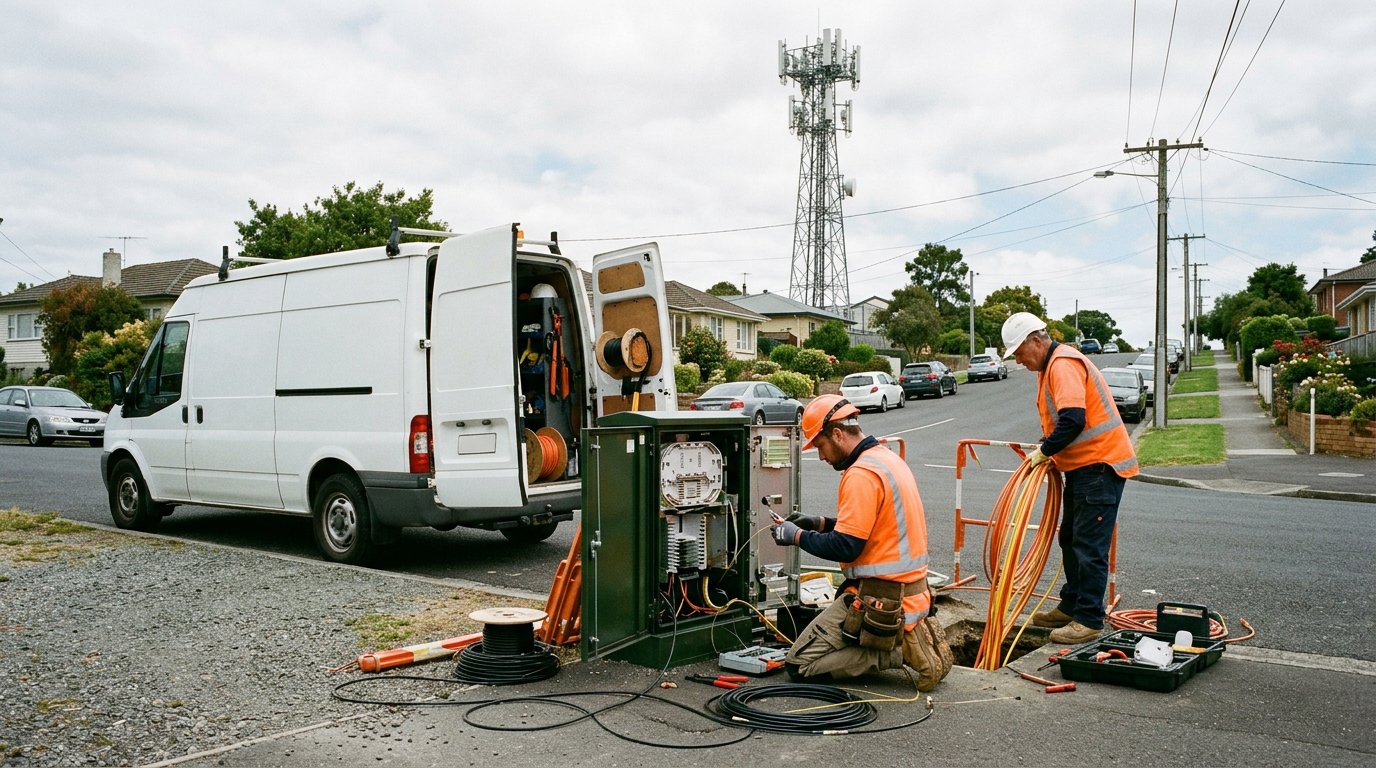
An internet service provider may handle customer registration, plan changes, installation appointments, equipment allocation, service faults, billing enquiries, and renewals.
Network teams manage infrastructure and maintenance, while customer service teams handle requests and communicate updates.
Technology can connect these workflows, helping teams work from consistent records and giving managers a clearer view of outstanding activity.
Organisations in this sector face different challenges, but several recurring problems can make operations more difficult than they need to be.
Subscriber information spread across different systems.
A related capability Enterprise software →
Difficulty tracking installation requests and service faults.
A related capability Workflow automation →
Disconnected customer support and technical teams.
A related capability Systems Integration →
Manual administration of service plans and renewals.
A related capability Workflow automation →
Limited visibility into support workloads and response times.
A related capability Dashboards →
Difficulty maintaining consistent asset and equipment records.
A related capability Enterprise software →
We design systems around the organisation's operational requirements. A solution may be a standalone application, an integration, an automated workflow, a reporting environment, or a combination of these.
Organise subscriber profiles, service plans, customer interactions, installation details, and relevant account records.
Benefit Easier access to customer information and more consistent administration.
Record service issues, categorise faults, assign cases, track progress, and document resolution.
Benefit Better visibility into outstanding issues and improved coordination between support teams.
Coordinate installation bookings, technician assignments, equipment allocation, and completion records.
Benefit More organised installation workflows and clearer tracking of field work.
Support plan administration, renewal reminders, billing-status workflows, and integration with appropriate billing platforms.
Benefit More structured subscription administration and fewer repetitive manual tasks.
Maintain infrastructure and equipment records and consolidate suitable operational information from existing systems.
Benefit Better asset visibility and more informed operational planning.
A customer submits a service request through an approved channel. The system records the issue, assigns it to the relevant team, and tracks progress. If a technician visit is needed, the installation or field-service workflow coordinates the assignment. Customer service can see the status, while managers review workload and resolution trends.
Network monitoring itself may require specialised tools and integrations; a customer management system should not be presented as a substitute for network engineering platforms.
Suitable applications include customer enquiry routing, support knowledge assistants, renewal reminders, document processing, and automated operational reports. AI responses should use approved information and provide escalation paths for complex issues.
Every implementation has different objectives. These are intended benefits, not guaranteed outcomes.
Better subscriber information management.
Improved tracking of service requests.
More organised installations.
Better coordination between support and technical teams.
Reduced repetitive administration.
Clearer reporting on service operations.
These are intended benefits, not guaranteed outcomes. Obitrek would define suitable objectives with the organisation before implementation.
We review your customer and technical workflows, existing platforms, data requirements, and integration options. We then design the system to fit your service model and operational requirements.
The starting point is understanding your operation. Obitrek turns operational requirements into practical technology systems designed around your needs.
Related capabilities