Maintenance and Spare-Parts Systems
Record faults, schedule maintenance, assign repairs, track work orders, and manage spare-parts inventory.
Benefit More organised maintenance and improved visibility into outstanding repairs and parts requirements.
Mining organisations coordinate equipment, personnel, materials, production activities, maintenance, procurement, logistics, and compliance records across complex operating environments.
When information is fragmented, it becomes harder to monitor equipment, understand production performance, track resources, and coordinate work between operational teams.
Obitrek builds technology systems that help mining organisations organise operational information, coordinate maintenance and resources, and improve visibility into the activities that support production.
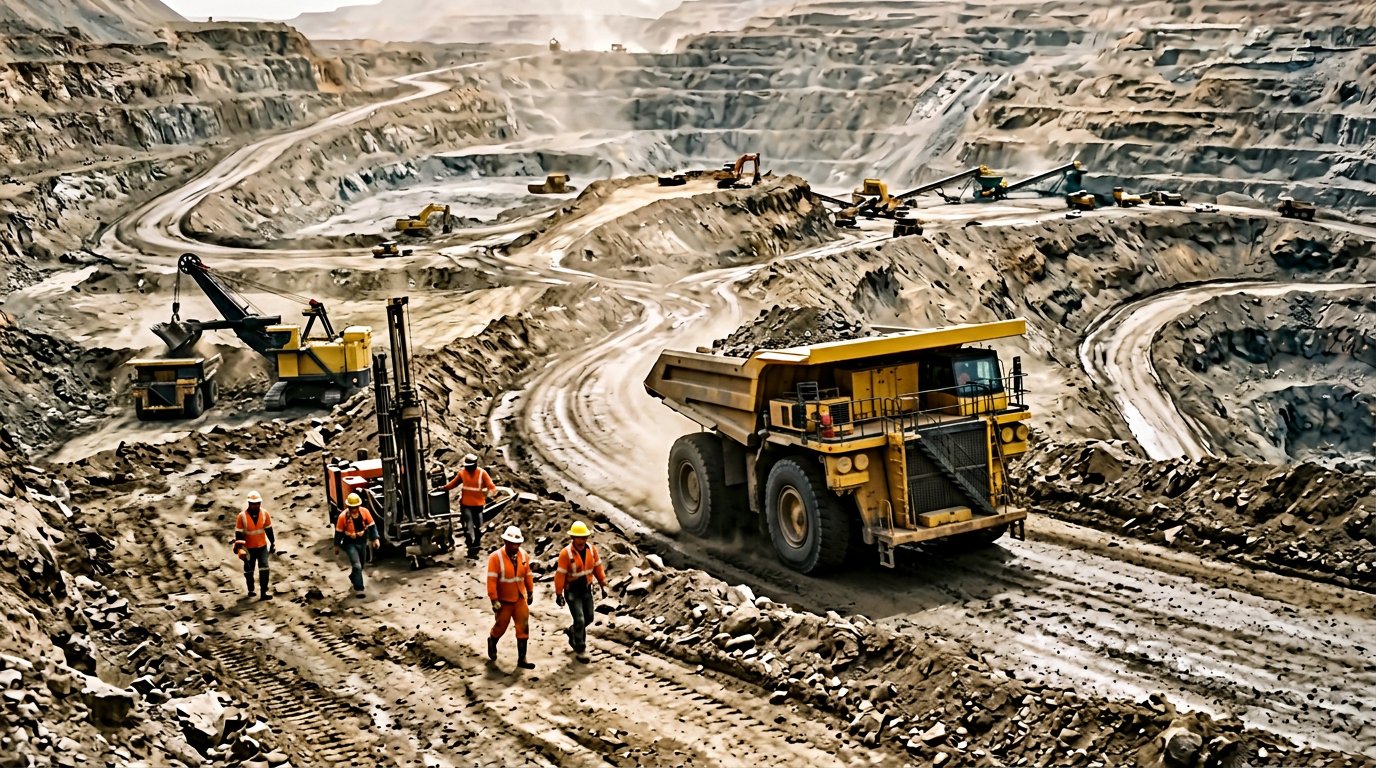
Mining operations may involve extraction, processing, material handling, equipment maintenance, inventory, transport, contractor coordination, and environmental or safety reporting.
Each activity creates information that management needs to review. Equipment availability affects production, spare-parts shortages can delay repairs, and incomplete records can make it difficult to investigate recurring operational problems.
Technology can help create structured records and connect appropriate workflows.
Organisations in this sector face different challenges, but several recurring problems can make operations more difficult than they need to be.
Fragmented equipment and maintenance records.
A related capability Enterprise software →
Difficulty tracking spare parts and operational supplies.
A related capability Enterprise software →
Limited visibility into production quantities and equipment availability.
A related capability Dashboards →
Disconnected contractor, procurement, and maintenance workflows.
A related capability Systems Integration →
Difficulty consolidating operational and compliance records.
A related capability Cybersecurity →
We design systems around the organisation's operational requirements. A solution may be a standalone application, an integration, an automated workflow, a reporting environment, or a combination of these.
Maintain equipment registers, locations, service histories, inspection records, and documentation.
Benefit Easier access to equipment information and better asset oversight.
Record faults, schedule maintenance, assign repairs, track work orders, and manage spare-parts inventory.
Benefit More organised maintenance and improved visibility into outstanding repairs and parts requirements.
Capture production quantities, shift reports, operational events, and relevant performance measures.
Benefit More consistent production records and clearer comparisons between shifts or sites.
Track consumables, spare parts, suppliers, purchase requests, stock movements, and deliveries.
Benefit Better visibility into operational supplies and more structured purchasing processes.
Organise inspections, incident records, corrective actions, training records, and required documentation. These systems support, but do not replace, required safety expertise and regulatory processes.
Benefit Better access to records and improved tracking of outstanding actions.
Combine suitable equipment, maintenance, inventory, and production data to support management reporting.
Benefit Better visibility into recurring problems, resource use, and operational performance.
An equipment fault is recorded against an asset and routed to the responsible maintenance team. The work order tracks diagnosis, repairs, parts used, and completion. Production records show the operational impact, while reporting tools help managers review recurring faults and maintenance workload.
Connections to industrial sensors, fleet systems, or specialised mine-control platforms depend on compatibility and the relevant engineering and safety requirements.
Potential applications include shift-report preparation, maintenance alerts, document search, inventory notifications, and analysis of historical equipment records. Predictive maintenance requires suitable data and technical validation.
Systems used in mining environments must consider network reliability, restricted access, operational safety, and cybersecurity. Critical equipment control should only be handled through appropriate specialist engineering.
Every implementation has different objectives. These are intended benefits, not guaranteed outcomes.
Better equipment and maintenance records.
Improved visibility into production activity.
More organised inventory and procurement.
Easier reporting across shifts and sites.
Better tracking of operational actions.
A foundation for integrating suitable monitoring systems.
These are intended benefits, not guaranteed outcomes. Obitrek would define suitable objectives with the organisation before implementation.
We assess the operational workflows, information requirements, site conditions, existing technology, and relevant security constraints before designing a system for the organisation.
The starting point is understanding your operation. Obitrek turns operational requirements into practical technology systems designed around your needs.
Related capabilities