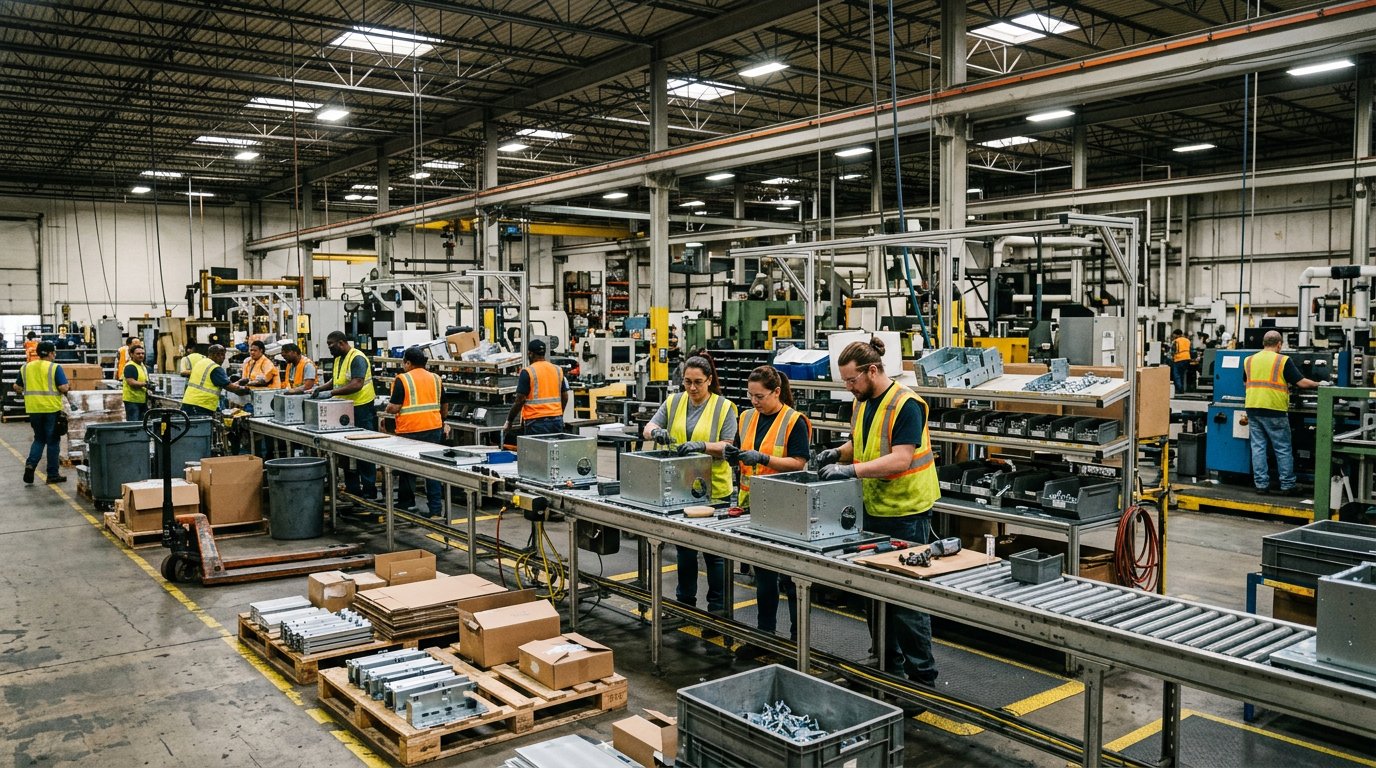
We design systems around the organisation's operational requirements. Depending on the need, a solution may be a standalone application, an integration between existing platforms, an automated workflow, a reporting environment, or a combination of these components.
A
Production management systems
The need. Manufacturers need to plan production, allocate resources, monitor output, and understand whether production targets are being met.
What we can build. Systems for production scheduling, work orders, production quantities, material consumption, job status, and performance reporting.
How it works. Production teams record or capture activity as work progresses. Managers can review planned versus actual output, monitor outstanding jobs, and identify delays that require intervention.
The benefit. Better production visibility, more organised workflows, and more informed decisions about production capacity and priorities.
Enterprise software →
B
Inventory and raw material management systems
The need. Production depends on accurate information about raw materials, components, work in progress, and finished goods.
What we can build. Inventory systems that track stock quantities, receipts, issues, transfers, material usage, reorder thresholds, and finished-product availability.
How it works. Stock movements are recorded in a central system. Where appropriate, barcode scanning and integrations can reduce manual entry and improve the accuracy of stock records.
The benefit. Better stock visibility, improved purchasing coordination, fewer avoidable stock discrepancies, and a clearer picture of material availability.
Enterprise software →
C
Equipment and maintenance management systems
The need. Manufacturers need to maintain equipment, record faults, coordinate repairs, and reduce avoidable disruption.
What we can build. Equipment registers, digital maintenance schedules, fault-reporting workflows, repair histories, spare-parts records, and maintenance dashboards.
How it works. Equipment is registered in the system, maintenance tasks are scheduled, and technicians record inspections and repairs. Managers can review outstanding work and identify recurring issues.
The benefit. More organised maintenance, better equipment records, and improved visibility into downtime and repair activity.
Enterprise software →
D
Quality management and traceability systems
The need. Manufacturers must monitor product quality, document inspections, investigate defects, and maintain appropriate production records.
What we can build. Digital inspection forms, quality checklists, defect registers, corrective-action tracking, batch records, and traceability workflows.
How it works. Inspection results and production records are linked to the relevant product, batch, order, or process. Quality teams can investigate recurring issues and review documented corrective actions.
The benefit. More consistent quality records, better traceability, and improved visibility into the causes of defects and rework.
Enterprise software →
E
Business intelligence and production analytics
The need. Production data is valuable only when decision-makers can interpret it and act on it.
What we can build. Dashboards and reports covering output, downtime, material consumption, defect rates, order completion, operating costs, and other relevant performance indicators.
How it works. Data from suitable operational systems is consolidated and presented through reports and dashboards. Management can compare performance over time and investigate deviations from targets.
The benefit. Faster access to operational information, clearer performance trends, and stronger evidence for management decisions.
Dashboards →
F
Procurement and supplier management systems
The need. Manufacturers depend on suppliers for materials, components, spare parts, and other resources required for continuous operations.
What we can build. Systems for purchase requests, purchase orders, supplier records, delivery tracking, approval workflows, and procurement reporting.
How it works. Requests and approvals follow defined workflows. Teams can track order status, record deliveries, and compare supplier performance using available data.
The benefit. Better purchasing coordination, more organised supplier information, and improved visibility into procurement activity.
Enterprise software →
G
Costing and financial operations systems
The need. Manufacturers need to understand expenditure and how production activity affects operating costs and financial performance.
What we can build. Operational costing tools, expenditure dashboards, cost-allocation workflows, production cost reports, and integrations with suitable accounting or enterprise resource planning systems.
How it works. Relevant material, production, and financial data is brought together to support costing and analysis. The system can be designed to work alongside existing accounting software rather than unnecessarily replacing it.
The benefit. Better cost visibility, more informed resource allocation, and improved understanding of the financial implications of operational decisions.
Analytics →
H
Order management and distribution systems
The need. Finished products must be matched to customer orders, prepared for dispatch, and delivered through coordinated distribution processes.
What we can build. Order-tracking systems, dispatch workflows, finished-goods allocation, delivery coordination, and customer order-status portals.
How it works. Orders move through defined stages, from confirmation and preparation to dispatch and fulfilment. Relevant teams can view status updates and identify outstanding tasks.
The benefit. Better coordination between production, warehousing, sales, and distribution, with improved visibility into order fulfilment.
Digital Platforms and Portals →
I
Integrated manufacturing management systems
The need. Organisations with multiple departments or facilities may require a more connected view of their operations.
What we can build. Integrated systems connecting suitable production, inventory, procurement, maintenance, quality, order management, and reporting functions.
How it works. Systems share relevant information through common data structures, APIs, or other appropriate integrations. Access permissions and workflows are designed around organisational responsibilities.
The benefit. Less fragmented information, improved coordination across departments, and a stronger foundation for managing complex operations.
Systems Integration →